How Long Should Trousers Be? Hem Lengths and Breaks Explained
Trouser length is not a one-size-fits-all: the right hem is chosen by break and shoe height.
In this guide
Trouser length is not a one-size-fits-all: the right hem is chosen by break and shoe height. The fold that appears at the front of the leg is the break, and it can fall just above the shoe with with no break, touch the top with a slight break, or fold across the top with a full break.
Whether you're dressing up for a suit and tie or heading to casual Friday, the break between your trouser hem and shoe is more important to your look than the inseam measurement alone.
Understanding breaks lets you ask exactly how you want your trousers to fit—no break, slight break, or even a full break over your navy Oxfords. You can even get a tailored pant that looks perfected by your sneakers.
But it’s not just about break. Your shoes, posture, and whether your trousers are cuffed all affect the length you should ask for.
What break means
The break is the fold, or crease, that appears at the front of the trouser leg where the hem meets the top of the shoe. It creates a slight fold before the hem hits the shoe and can be 0 -2 mm.
The amount of break changes the footwear and attitude of the trousers. Height, fabric weight, and cut will each change how the small fold reads against the shoe.
The lengths you can ask for
If you're not sure what length to ask for, the basic categories are:
- No break. The trouser hem hangs straight and doesn't touch the shoe at all
- Slight or minimal break. They break only on the front of the shoe and are designed to accommodate casual shoes
- Half or quarter break. As the name suggests, the hem creases just a bit across the shoe
- Full break. A deep crease across the shoe.
- Adding cuffs changes the hem. Even a deep full break can look slightly flatter against the shoe. For cuffed trousers, no break or only a slight break keeps the crisp cuff in view.
How to measure before a tailor visit
Shoes are the key to measuring. You should always measure for length in the shoes you will wear with those trousers.
If you're spec'ing out new trousers to be hemmed, you should do so before sending them in for a tailor. Wear the intended shoes, stand in a normal posture and have a friend pin the hem at the joint at the exact height you require.
You should be able to see some sock or the top of the shoe and the hem should just touch the back of the shoe.
Why width changes the answer
A dressier, more tapered trouser leg can initially look shorter as it has less fabric to drape. Conversely, a roomier leg can be hemmed a bit longer.
Oblong, store-bought trousers may be hemmed a bit longer to compensate, while the more traditional, cut-the-fabric-for-your-legs bespoke trousers will read exactly as intended.
Cuffs change the hem conversation
Cuffed trousers should generally have no or slight break. Cuffs limit slanted hemline. Uncuffed ones can have a half or full break
What not to overstate
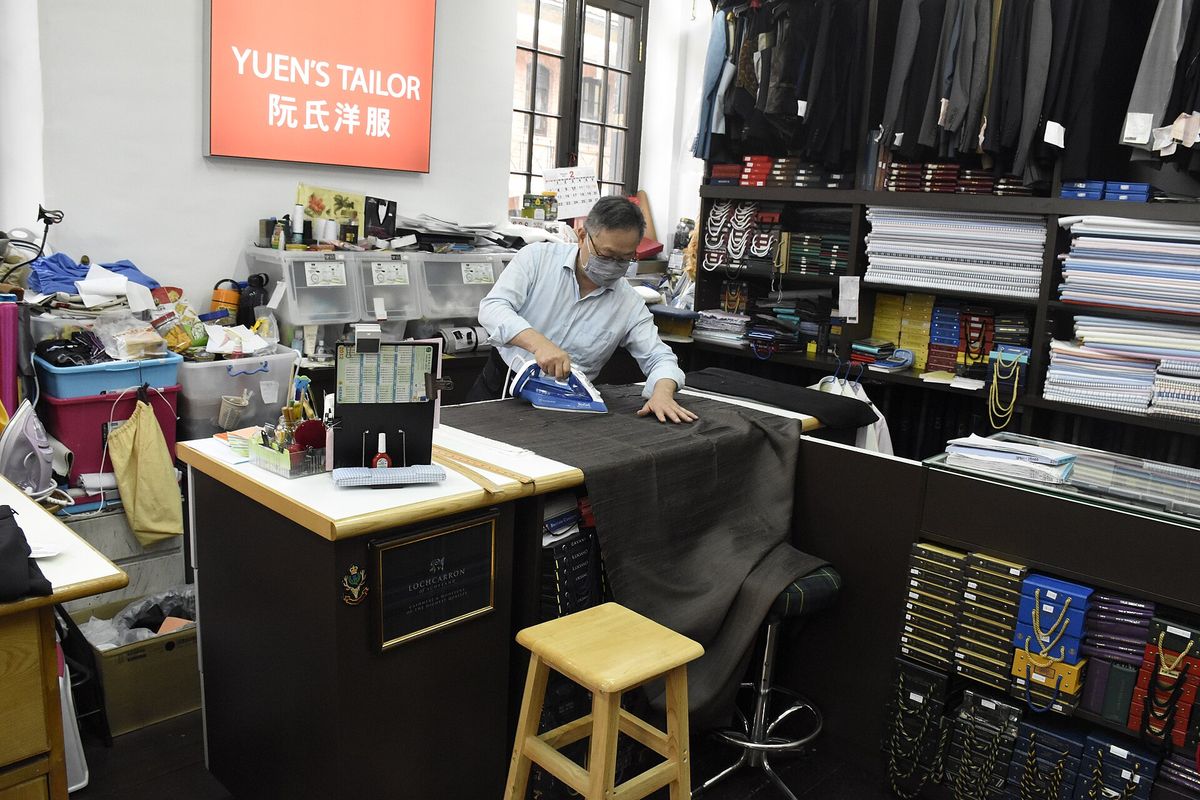
Remember, these guidelines are to help you know what length to ask for based on what you expect to get. Your actual trousers will only come into focus when they are hemmed. Having a good tailor to work with lets you work through any too-short or too-long. As long as you can tell the break difference between no break, or a quarter or a half, even a little nod in the direction of your desired break will let a tailor work with you on achieving it.
Still, a tailored pant that goes with your shoes is less important than a pant that goes with your shoes.
The target of this article is someone who knows a little about the styles of trousers and breaks available but doesn’t know what length to ask for. Knowing the basics of sized breaks and what will visually occur lets you get more from your tailor but then step back and trust them to turn your pant around.