How to Measure Yourself for Clothes Bought Online
Size charts rely on three main points: the fullest part of your bust or chest, your natural waist, and your widest hips.
In this guide
Bust, waist, hips: the core measurements
Size charts rely on three main points: the fullest part of your bust or chest, your natural waist, and your widest hips.
To get these numbers:
Bust: Wrap the tape around the fullest part of your chest, under your armpits, and level across your back.
Waist: Measure around your waist’s narrowest point, about 1 to 2 inches above your navel.
Hips: Measure around the fullest part of your hips, about 8 inches below your waist.
Legs and upper body: inseam, shoulders, sleeves
You will also need four key torso and leg measurements for most tops and bottoms.
Inseam: Measure your inseam from the top of your inner thigh to 1 inch below your ankle bone.
Shoulders: Measure from the top of one shoulder to the top of the other, across your back.
Sleeve: Measure from the center of your back to your wrist bone, following your elbow’s natural curve.
How to measure without changing the numbers
Take measurements while wearing the undergarments and bra you would wear with the clothes you are buying. Certain undergarments can change your measurements by as much as an inch.
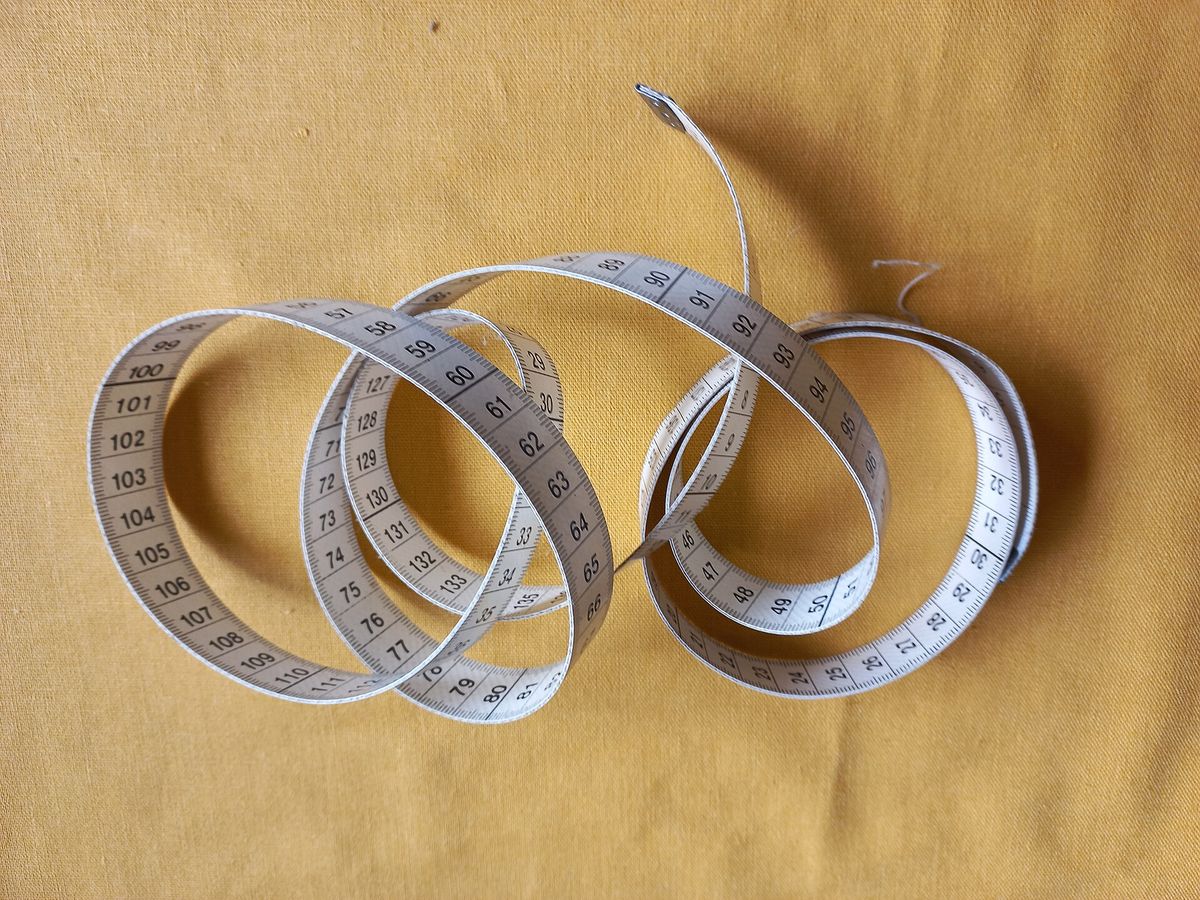
Stand in front of a mirror and make sure your measuring tape is level and sitting straight, not twisted. Pull the tape snugly, but do not compress the part you are measuring. One finger should fit between the tape and your body.
Reading size charts and garment measurements
Garment size charts are not the same as garment measurements. Buy to your body, and the {..} matter more.
{..} refers to the measurement difference between the finished garment and your body point, due to how the clothing is designed and finished..
Positive ease means the finished garment is larger than the body measurement..
To compare actual garment measurements: Measure the chest/pit-to-pit, then double it. Measure pants flat at the waist and hips, then double.
Measure pants’ inseams flat, from crotch to cuff.
CAD software and design instructions have garment-specific target measurements, but primarily, online shoppers see these standardized finish sizes:
Why online clothing returns happen
A number of factors drive returns, but fit is consistently the reason among shoppers, especially when buying different items from the same brand.
Bust and hip measurements are key because even a half-inch difference in hips or waist between your body and the diagram means a different-shaped garment.
For woven shirts and jackets, the shoulder width matters.
What's next
Clothing shopping online relies on body measurements that you can take accurately. Whether you go by store size chart or garment measurements directly, the challenge is understanding the difference between your own body points and how the finished garment fits:
Positive ease shows that the suit is roomy, and negative ease means the T-shirt fits snugly.
The final test is whether the garments feel good and look the way you want, no matter what brand or size chart you use.